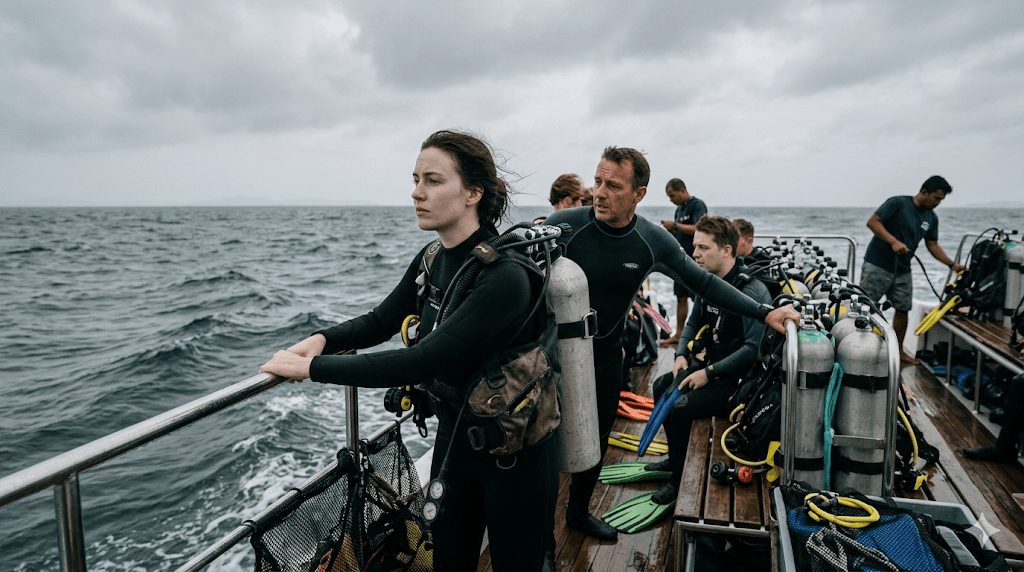
The boat left Sanur at 6:15 a.m. in a 1.5-metre swell. By the second site he had vomited twice over the rail, was pale and sweating, and still insisted on gearing up because he had paid for three dives. Twenty minutes into the descent his mask flooded, he bolted for the surface, and the guide caught him at 4 metres with an empty cylinder and trembling hands. The seasickness did not cause the rapid ascent — but it put him on the boat exhausted, dehydrated, and cognitively impaired before he ever reached the reef.
Seasickness is not a character flaw and it is not something you "push through" on a dive day. It is a vestibular mismatch that degrades the exact faculties you need underwater: clear thinking, steady breathing, and the energy to manage problems calmly. This guide covers prevention, medication choices, hydration, the decision to cancel a dive, and how motion sickness connects to the panic cascade.
1. The Mechanism: Why Boats Break Divers
Seasickness (motion sickness) occurs when your inner ear, eyes, and proprioceptive system send conflicting signals to the brain's vomiting centre. On a rocking dive boat your inner ear detects motion, but if you stare at a fixed horizon or read your phone, your eyes report stability. The brain interprets this as possible poisoning and triggers nausea, sweating, pallor, and vomiting as a protective reflex.
For divers, three factors compound the problem:
- Pre-dive dehydration — vomiting and sweating before the first jump reduce blood volume and raise DCS risk (see Decompression Sickness guide).
- Medication side effects — common anti-nausea drugs cause drowsiness and dry mouth, which worsen regulator comfort and CO₂ tolerance.
- Exhaustion before entry — fighting nausea for two hours leaves no reserve for current, equipment problems, or buddy separation.
Seasickness Severity — Operational Impact
2. Prevention: Position, Food, and Timing
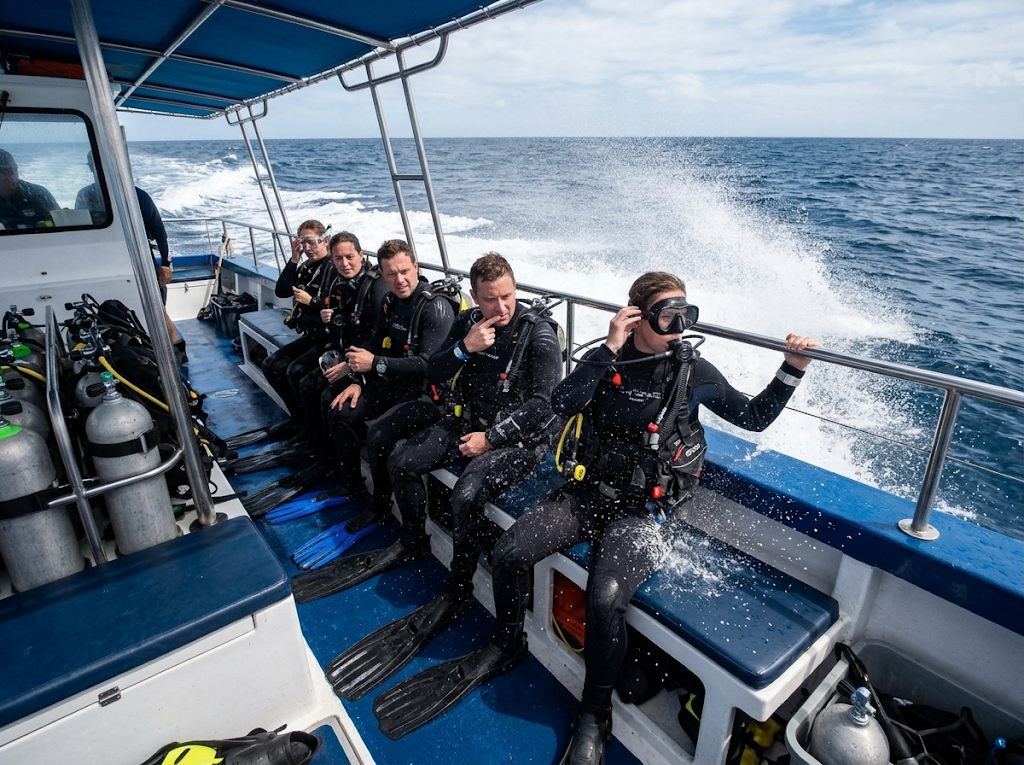
Non-pharmaceutical prevention is underrated because it costs nothing and has no drug interactions.
Boat Position
✓ Pass
Stern or amidships, low centre of gravity, fresh air on the face, eyes on the horizon, avoid enclosed cabin smells
✗ Fail
Bow (maximum pitch), reading phone or camera screen, diesel fumes in the cabin, lying flat with eyes closed while boat rocks
Food and Hydration
✓ Pass
Light breakfast 2–3 hours before departure (banana, toast, crackers); sip water or electrolyte drink continuously; avoid alcohol the night before
✗ Fail
Heavy greasy meal, empty stomach, alcohol, excessive caffeine — all amplify nausea and dehydration
Ginger (250–500 mg capsules, or fresh ginger tea) has modest evidence for reducing nausea without sedation. It is a reasonable first-line option for mild susceptibility. It is not strong enough for heavy swell days if you know you get sick — plan medication accordingly.
3. Medication: Scopolamine, Antihistamines, and Rules
Anti-Nausea Options for Dive Days
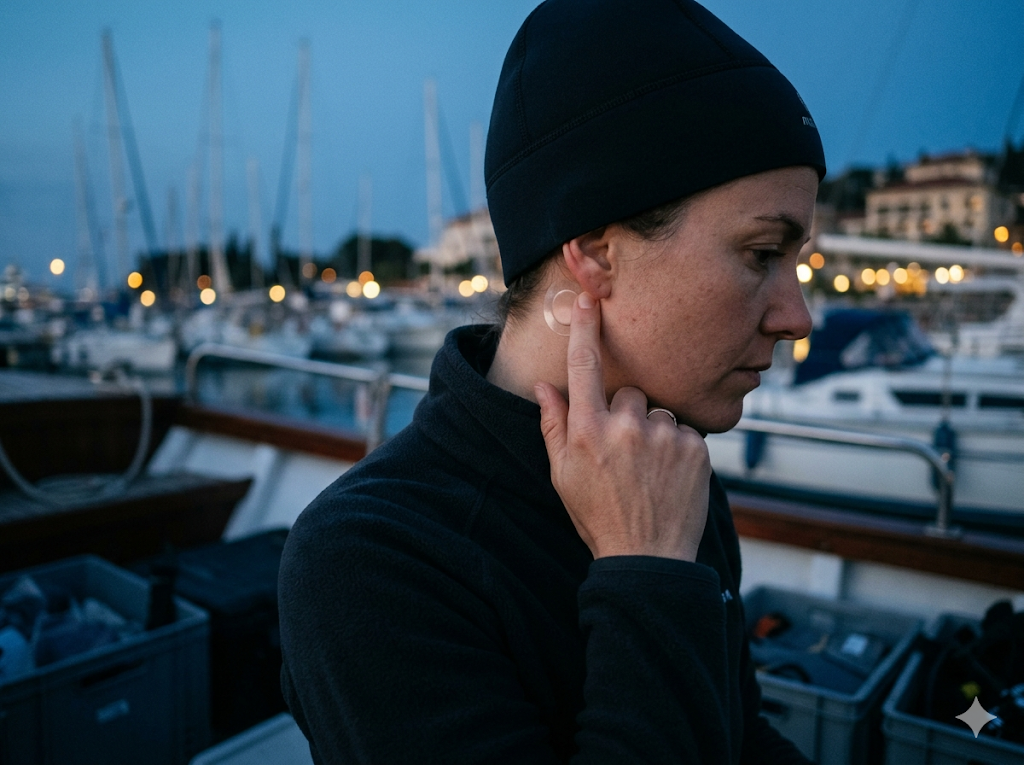
Critical timing rule: take any new medication on a non-diving day first. Scopolamine in particular can cause disorientation that mimics narcosis symptoms underwater. If you feel impaired on the boat, that impairment continues with a regulator in your mouth.
4. When to Cancel the Dive
This is the decision most divers get wrong because of sunk cost: "I paid for three dives."
• You have vomited and cannot keep fluids down
• You feel faint, confused, or heavily sedated from medication
• You are too weak to walk the deck fully kitted without assistance
• Your buddy or guide agrees you are not fit — override your ego
• Moderate nausea persists after 30 minutes at the site
• You have not urinated in 4+ hours despite drinking (dehydration signal)
• This is your first boat dive in swell and medication is untested
Sitting out one dive is cheaper than a hyperbaric chamber evacuation. A reputable operator will credit or reschedule — and if they pressure a visibly ill diver to enter the water, that is an operational red flag, not a personal failure.
5. The Panic and Exhaustion Link
Seasickness does not stay on the boat. A nauseated, dehydrated diver enters the water with elevated CO₂ sensitivity, reduced cognitive reserve, and often anxiety about vomiting through a regulator. That is the entry point for the underwater panic cascade described in the Underwater Panic guide: skip-breathing, buoyancy loss, and uncontrolled ascent within seconds of a minor trigger.
Exhaustion compounds the same pathway. Fighting swell for three hours before a deep dive is functionally similar to diving after poor sleep and a hangover — your margin for error is gone before you descend.
Practical rule: if you would not drive a car safely, do not dive. The same impaired judgement that causes lane drift causes missed buddy signals and missed depth limits.
6. The ScubaProof Filter: Boat Operations That Protect Sick Divers
Red Flags — Ignoring Seasick Divers
• Reviews citing "they made sick divers get in anyway" or "no shade or water on board"
• Overcrowded boats with no quiet recovery area — worsens vestibular stress
• No electrolyte drinks or drinking water replenishment between dives
• Safety score below 3.5; Staff Conduct complaints about dismissive guides
Yellow Flags — Ask Before Booking
• No briefing on seasickness prevention or medication disclosure policy
• Very early departures in monsoon season with no weather contingency
• Triple-dive schedules with no surface recovery time for seasick guests
• Vague answers about skip-dive credit or partial refund policies
Safety, Staff Conduct, Gear, Oxygen Readiness, and Trust Score on ScubaProof aggregate these patterns. Choosing an operator that lets sick divers rest is choosing one that lowers panic and rapid-ascent incidents for the whole group.