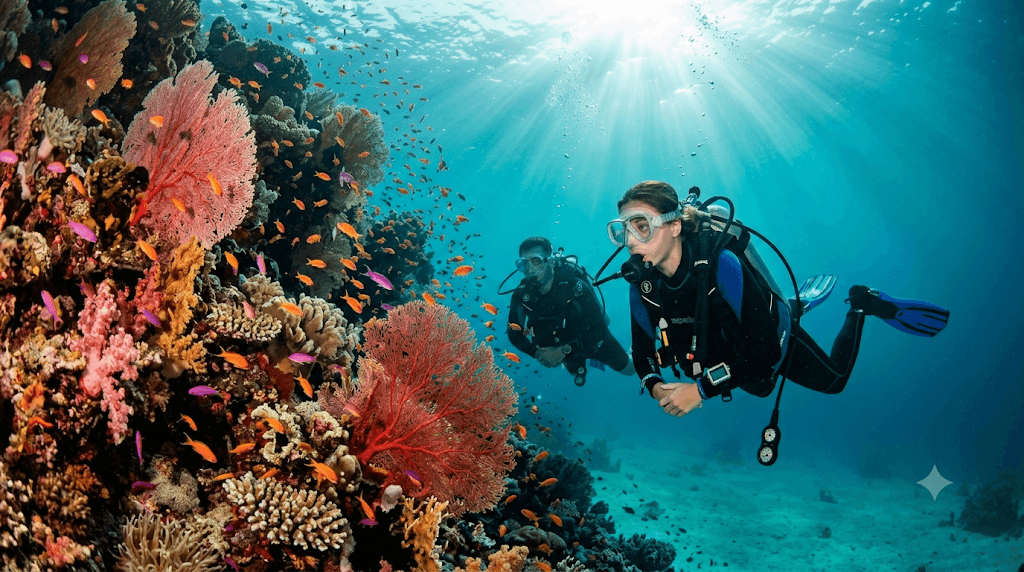
The Philippines spans 7,600 islands and three distinct dive economies: the wreck graveyard of Coron Bay, the liveaboard-only wilderness of Tubbataha Reef, and the current-swept walls of Apo Reef and Verde Island Passage. A diver who mastered calm shore entries in Anilao is not automatically prepared for a 2-knot drift at Apo Reef or a zero-visibility penetration line inside the Irako Maru. The country has excellent hyperbaric infrastructure in Manila and Cebu — but evacuation from a remote liveaboard can still cost you the golden hour that decides neurological recovery.
With hundreds of operators from budget backpacker shops to international liveaboard fleets, variance in standards is enormous and no single agency polices day-to-day operations. This guide gives you the site-specific physics, chamber logistics, and vetting questions you need before you book — not after you surface with symptoms.
Three Destinations, Three Risk Profiles
Philippines diving is not interchangeable. Match your certification, experience, and operator competence to the specific region — not the country flag on the brochure.
Philippines Dive Regions — Risk Profile
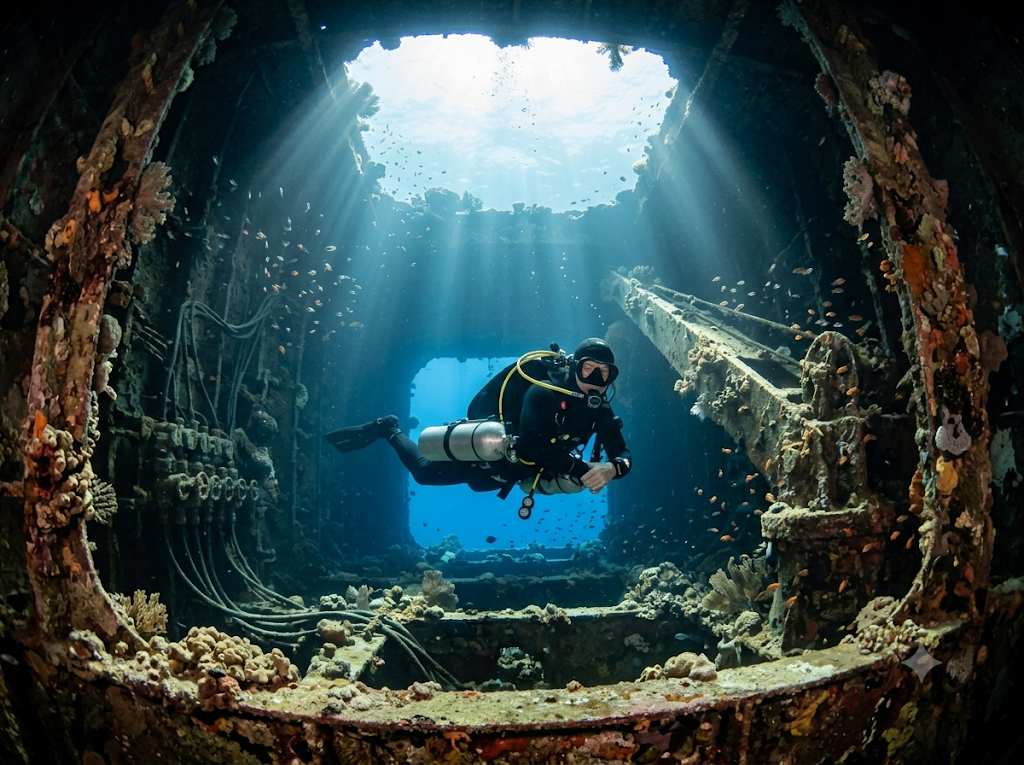
Coron Wrecks: Physics of a Silt Trap
Coron Bay holds 10+ Japanese supply ships sunk in a 1944 air raid. The wrecks sit upright on slopes from roughly 10 m to 40 m, making them accessible to Advanced Open Water divers on the exterior — but penetration is a separate skill set requiring wreck specialty training, a guideline, and a reel.
The hazard profile is physical, not dramatic:
- Silt. Fin kicks inside a cargo hold reduce visibility to zero in seconds. Disorientation in an overhead environment without a guideline is how recreational divers die in wrecks — not "getting lost in the ship."
- Thermocline. Surface water near 28°C can drop to 22°C inside the wrecks. Cold increases gas consumption and accelerates fatigue.
- Depth creep. The Akitsushima and Irako Maru decks sit near 25–35 m. Narcosis and nitrogen loading rise with depth (Henry's Law — more gas dissolves as partial pressure increases). A wreck that "looks shallow" from the deck can put you at 30 m on the bottom.
Recreational rule: stay outside the wreck unless you hold a Wreck Diver specialty and the operator runs a penetration protocol with a reel, primary and backup lights, and a maximum penetration distance. Open Water divers have no business inside a hold.
Coron Wreck Dive — Pass/Fail
✓ Pass
Exterior dive only, SMB deployed before ascent, guide-to-diver ratio 1:4 or tighter, briefing covers silt protocol and max depth, personal dive computer on every diver.
✗ Fail
Penetration offered to uncertified divers, no SMB requirement, group of 8+ with one guide, or "we swim through the engine room" without a reel and line.
Tubbataha: Liveaboard Logistics and the Evacuation Gap
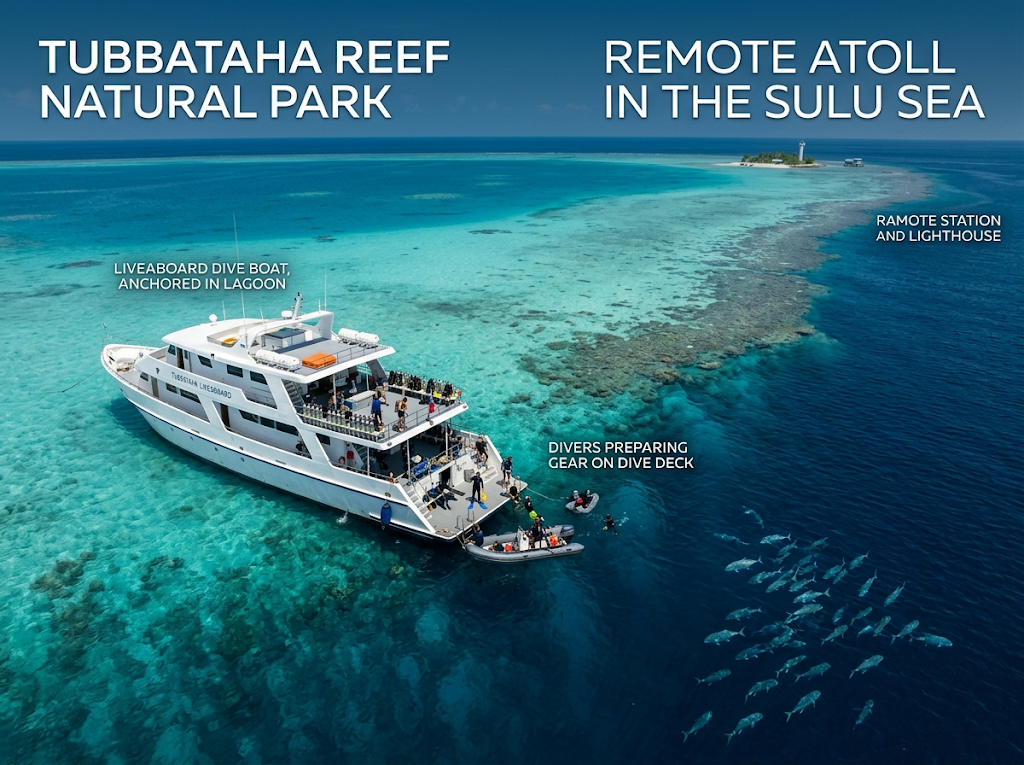
Tubbataha Reef Natural Park sits 150 km southeast of Puerto Princesa in the Sulu Sea. It is accessible only by liveaboard, open roughly March through June when seas are calmest. The diving is world-class — sharks, mantas, pristine walls — but the safety infrastructure is oceanic, not urban.
Critical numbers:
- Nearest hyperbaric chamber: Manila (St. Luke's Medical Center or Philippine General Hospital) or Cebu — neither is on the reef.
- Medevac time from Tubbataha: typically 8–14 hours by boat to Puerto Princesa, then flight or road to a chamber. The first-hour oxygen protocol matters more here than almost anywhere in Southeast Asia.
- Liveaboard ratios: reputable boats run 1:5 certified divers per divemaster on open-water profiles; technical or deep profiles need tighter ratios.
Ask the liveaboard operator before you pay the deposit: "What is your DCS evacuation protocol from Tubbataha, and do you carry emergency oxygen with a demand valve on board?" A professional answer names the chamber, the communication chain, and shows you the O₂ kit location.
Apo Reef and Current: When Drift Becomes Dangerous
Apo Reef Natural Park off Mindoro Occidental offers walls, sharks, and currents that regularly exceed 1.5 knots. This is genuine drift diving — negative entries, reef hooks in designated zones, and SMB deployment before surfacing are standard practice, not optional extras.
The physics: a 2-knot current moves you 60 m per minute horizontally. A diver who loses the group or misses the pickup point drifts into open water with no reference. Boyle's Law still applies on ascent — a rapid uncontrolled rise from depth loaded with nitrogen is a direct decompression-sickness mechanism regardless of how "fun" the drift felt.
Minimum for Apo Reef: Advanced Open Water, Drift Diver specialty strongly recommended, personal SMB + reel, and an operator who caps groups at 6 divers per guide.
Seasonality and Visibility Windows
Philippines — Seasonal Dive Windows
Hyperbaric Chamber Access
The Philippines has better chamber coverage than most Southeast Asian destinations — but proximity depends on where you dive.
- Manila: St. Luke's Medical Center Global City — 24/7 hyperbaric unit. Philippine General Hospital — government backup.
- Cebu: Chong Hua Hospital — chamber facility serving Visayas divers.
- Palawan (Coron): no local chamber. Evacuation to Manila (~1 hour flight from Busuanga) or Cebu is the protocol. Budget 2–4 hours door-to-chamber from Coron town.
From Tubbataha, treat every suspected decompression sickness case as a time-critical medevac. Administer 100% oxygen on the boat (see the Emergency Oxygen guide), keep the diver horizontal, and call DAN before you call the coast guard.
DAN emergency hotline: +1-919-684-9111 (international, collect calls accepted).
Red Flags to Watch For
• Offers wreck penetration to Open Water divers without specialty certification
• Cannot name the nearest hyperbaric chamber or evacuation time from your dive site
• No emergency oxygen on the boat or liveaboard
• Runs guide-to-diver ratios above 1:6 on current sites
• Skips SMB requirement at drift or wreck sites
• Tubbataha liveaboard with no published DCS evacuation plan
• Dives during typhoon warnings or with "it will be fine" weather dismissals
• Rental computers shared across a group instead of one per diver
• No nitrox analysis log if offering enriched air
• Vague answers about cylinder hydro test dates
• Liveaboard with no dive insurance requirement stated in booking terms
How ScubaProof Scores Philippines Operators
ScubaProof's Trust Score weights Safety (50%), Staff Conduct (30%), and Gear Quality (20%), with deductions for active red flags. Oxygen Readiness is tracked separately — because on a Tubbataha liveaboard or a Coron day boat, emergency oxygen is the single variable that separates a manageable injury from a permanent neurological deficit.
Operators running wreck and current sites are evaluated on penetration protocols, SMB policy, and guide-to-diver ratios. A Trust Score above 4.0 indicates verified emergency preparedness and consistent standards across training and fun-dive operations. Use it to shortlist operators before you ask the chamber-evacuation question — then verify the answer yourself at the dock.