A certified Open Water diver entered the cargo hold of a WWII wreck in Coron through a gap in the hull. Visibility inside was two metres. His fin kicked the silty deck. The cloud engulfed the group. One diver lost the exit line, breathed through 80 bar searching for daylight, and surfaced alone on the wrong side of the wreck. Nobody died. The operation still ran exterior tours for OW guests the next day without mentioning that penetration requires wreck specialty training and a line reel.
Wrecks are magnets — history, structure, fish aggregation. For recreational divers the rule is simple: swim the outside, stay in the light, never enter overhead environments without proper training and equipment. This guide defines OW and AOW limits, explains rust and entanglement hazards, covers silt-out protocol, and clarifies when a line reel is mandatory — not optional decoration.
Certification Limits: What OW and AOW Actually Allow
Open Water (OW) certification trains you to 18 m in open water with direct access to the surface. Exterior wreck tours within depth limits are standard — hovering along the hull, swim-throughs that are open on multiple sides and well lit may be offered by some operators, but true overhead penetration (where you cannot ascend directly) is outside OW scope.
Advanced Open Water (AOW) extends depth to 30 m and includes a wreck dive experience — typically exterior navigation, not penetration training. Full wreck penetration requires a dedicated Wreck Diver specialty (PADI, SSI, etc.) covering line reels, silt management, redundant gas, and emergency procedures.
| Activity | OW | AOW | Wreck specialty | |---|---|---|---| | Exterior swim-along | ✓ (within depth) | ✓ | ✓ | | Open swim-through (light, multi-exit) | Centre policy | ✓ with briefing | ✓ | | Overhead penetration | ✗ | ✗ | ✓ with line + training | | Removing artefacts | ✗ | ✗ | ✗ (illegal in most jurisdictions) |
If a guide points you into a dark hold and says "just follow me," you have the right — and the obligation — to decline.
The Four Exterior Hazards: Rust, Entanglement, Silt, Sharp Metal
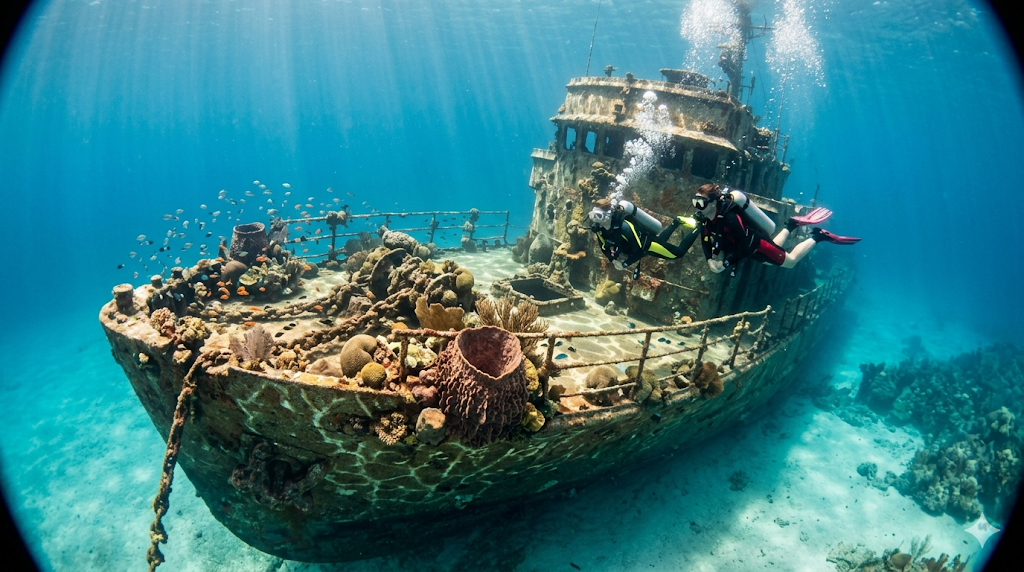
Rust and structural collapse. Steel wrecks corrode. Plates that looked solid in 2020 may be paper-thin now. Do not pull yourself along fragile railings or decks. Avoid penetrating spaces where the ceiling could collapse — rust does not announce failure.
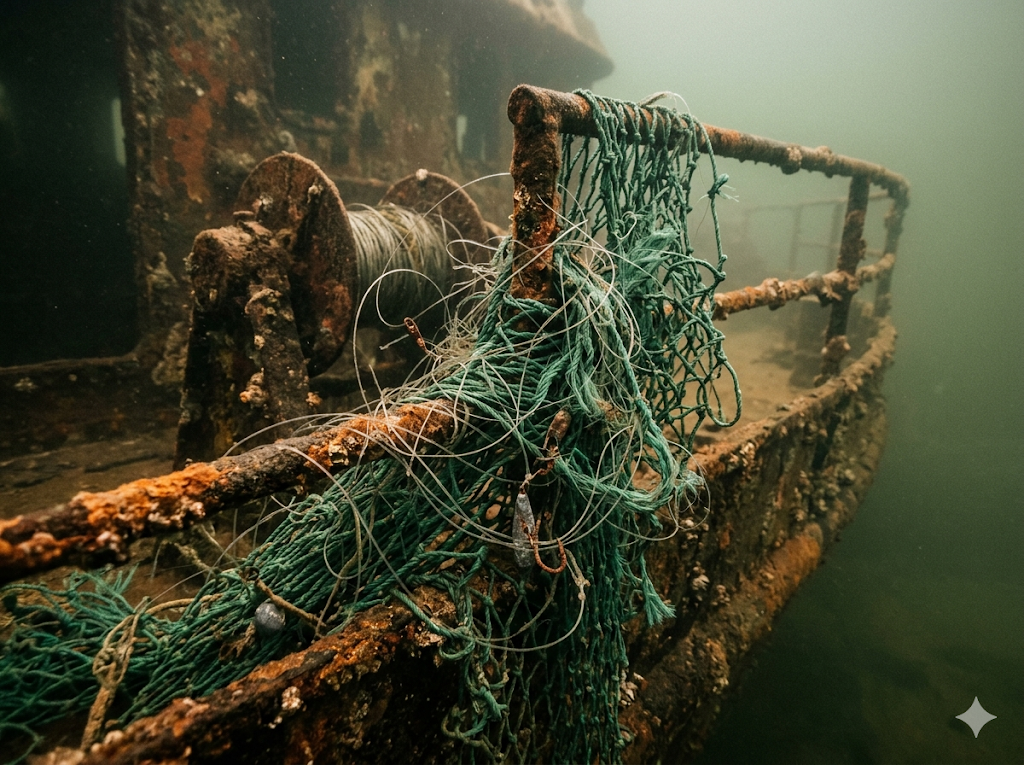
Entanglement. Fishing line, nets, cables, and old rigging drape wrecks worldwide. Carry a line cutter or shears on every wreck dive. Keep distance from monofilament — it is nearly invisible. If entangled: stop, signal buddy, cut carefully without spinning.
Silt. Organic sediment and rust particles inside holds and decks reduce visibility from 20 m to zero in one fin kick. Silt-out protocol: freeze, do not fin, locate buddy by touch or light, follow the guide line out if penetration-trained, or ascend only if direct vertical access to surface exists (exterior only).
Sharp edges. Cut steel, broken glass, and barnacle-encrusted metal slice wetsuits and skin. Maintain neutral buoyancy — never kneel on wreck structure. Gloves are controversial (some agencies discourage them near coral; wrecks are different — many operators recommend them for sharp metal).
Line Reels: When They Are Mandatory
A line reel (or spool) lays a continuous guide line from a fixed outside tie-off into penetration zones. It is the breadcrumb trail out when silt removes visibility.
Recreational exterior dives: a reel is not required if you stay outside and maintain direct surface access.
Any overhead penetration: a reel is mandatory — one continuous line, tied off outside, no gaps. Wreck specialty training covers tie-off points, line laying, and team protocols.
Never follow a reel laid by another team unless you are part of that team and briefed on their line — crossing lines causes entanglement disasters.
Penetration without training — what goes wrong
- ⚡Silt-out → disorientation → air consumption spike searching for exit
- ⚡Ceiling collapse or loose debris in confined space
- ⚡Single exit blocked by surge or another diver — no alternate route without training
- ⚡Cannot ascend directly — DCS and gas planning assumptions break down
Depth, Gas, and Narcosis on Wrecks
Popular wrecks sit at 18–40 m. USAT Liberty (Tulamben) rests from ~5–30 m — accessible to most levels on the shallow sections. Coron wrecks often bottom at 25–40 m — AOW minimum for deeper hulls, with narcosis and NDL considerations.
At 30 m on air, nitrogen narcosis impairs judgement — exactly when you need it most near sharp metal and overhead temptation. Stay shallower, dive nitrox within MOD if trained, and plan conservative turn-around times. Your computer NDL at 30 m is not "time to penetrate the engine room."
Wreck Dive Pre-Dive Checklist
Exterior wreck dive protocol
How ScubaProof Rates Wreck-Dive Operations
Wreck tourism drives revenue at sites like Tulamben and Coron. Centres that push untrained divers inside hulls sacrifice Safety and Staff Conduct — the two strongest predictors of a low Trust Score. Gear quality (rental cutters, reels) and Oxygen Readiness matter when silt-outs trigger emergencies.
ScubaProof red flags — critical
- 🚩OW divers led into overhead cargo holds — "everyone does it here"
- 🚩No line reel on penetration dives — guide relies on memory
- 🚩Reviews mention repeated silt-outs with near-miss air emergencies
- 🚩Operators encourage removing artefacts or disturbing human remains
ScubaProof yellow flags — caution
- ⚠Large groups on exterior wrecks — fin wash damages structure and silt
- ⚠No line cutter mentioned in briefing or rental gear
- ⚠Deep wreck sections combined with air-only dives at 35 m+
- ⚠DM enters penetration while guests wait outside without clear separation protocol
Wrecks reward respect, not bravery. Swim the outside, carry a cutter, refuse the dark corridor, and get wreck specialty training before you ever tie a reel to a coral-free tie-off. The history will still be there when you are qualified to go inside.