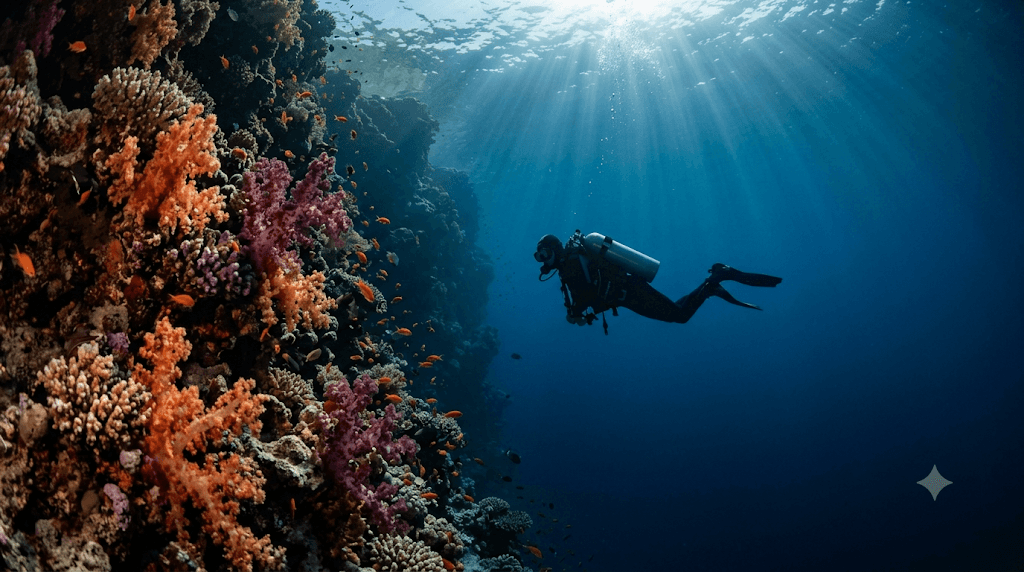
The Red Sea is Europe's backyard reef — warm, clear, and cheap enough that a week of diving costs less than a weekend in the Alps. Hurghada runs high-volume boat fleets to Giftun and Abu Ramada. Sharm el-Sheikh anchors Ras Mohammed National Park and the Straits of Tiran. Dahab is shore-entry culture, Bedouin tea between dives, and the Blue Hole arch that has claimed more certified divers than almost any single site on Earth.
The hazard is not the wildlife. It is volume, depth discipline, and operator variance. A PADI 5-Star resort in Sharm and a budget boat in Hurghada may share the same reef pin on the map and nothing else in their safety standards. This guide covers the physics of each zone, the Blue Hole without sensationalism, chamber logistics, and the questions that separate a professional Egyptian operator from a conveyor belt.
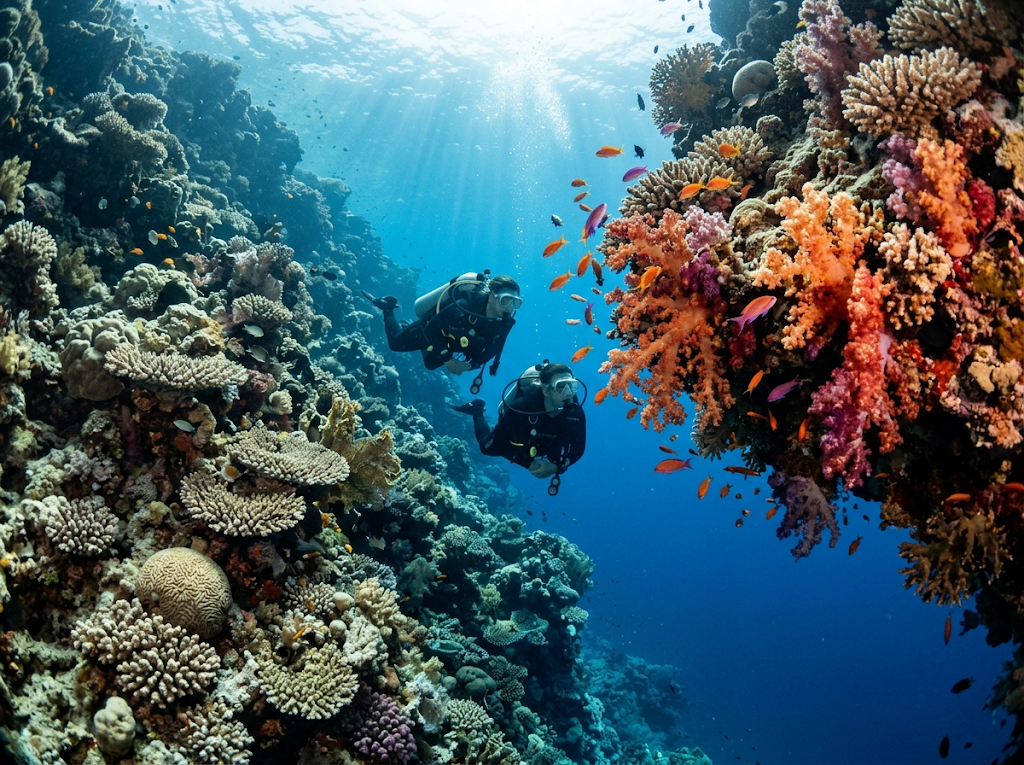
Three Bases, Three Operating Models
Red Sea Bases — Risk Profile
Hurghada: Volume and the Ratio Problem
Hurghada certifies thousands of divers annually and runs dozens of boats daily to nearby reefs. The economics favour volume: 20 divers per boat, one dive guide, two instructors if you are lucky. At 18 m on a calm reef this is manageable. At a current-split site with a mixed-experience group, it is not.
Ask before booking: "What is the maximum certified divers per dive guide on fun dives, and how do you split experience levels?" A professional answer gives a number (ideally 1:4 to 1:6) and describes how Open Water divers are separated from Advanced groups.
Gear quality varies wildly. Hurghada rental fleets cycle through three groups a day in peak season. Run the full rental gear inspection sequence yourself — inflator response, regulator dry-breathe, cylinder stamp dates, computer battery.
Sharm el-Sheikh: Currents and National Park Rules
Ras Mohammed's Shark and Yolanda Reefs and the Straits of Tiran (Jackson, Woodhouse, Thomas) produce genuine drift diving with currents that can exceed 1.5 knots. Drift Diver specialty or equivalent experience is the practical minimum for Tiran.
National park regulations require buoyancy control — fin kicks that contact coral trigger fines and site bans for operators. More importantly, poor trim at 25 m on a wall means uncontrolled depth swings. Each metre deeper loads more nitrogen (Henry's Law) and consumes no-stop time faster.
Sharm operators range from international resort chains with serviced gear rooms to independent boats with questionable maintenance. Trust Score and direct questions beat brochure photography.
Dahab and the Blue Hole: Physics, Not Folklore
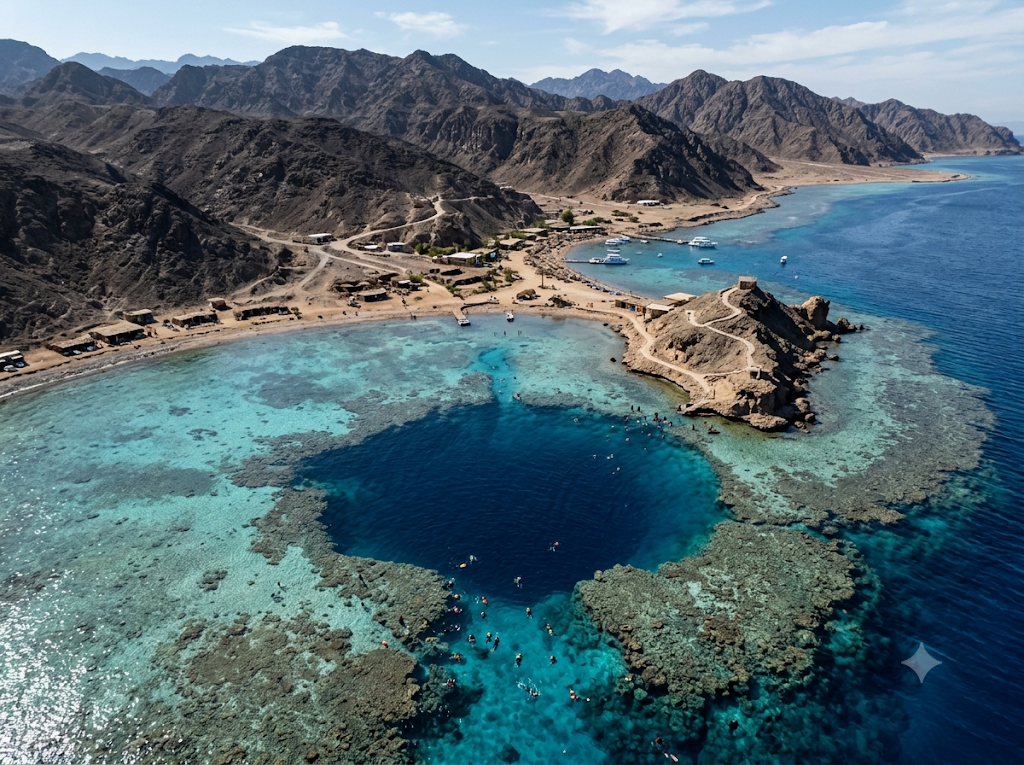
The Blue Hole of Dahab is a sinkhole that drops from roughly 6 m to over 100 m. The "arch" or "tunnel" at approximately 52–55 m connects the hole to the open sea. Recreational divers have died attempting to swim through it — not because the site is "cursed," but because depth, narcosis, and gas management combine at a profile no Open Water or Advanced Open Water certification prepares you for.
The facts without sensationalism:
- The recreational limit for most agencies is 40 m. The arch sits below that limit.
- At 55 m, nitrogen narcosis impairs judgment severely. Gas consumption is roughly 6.5× surface rate (Boyle's Law at depth).
- Divers who reach the arch on a single tank often lack sufficient gas for a safe ascent and decompression obligation — a direct path to decompression sickness or drowning.
- The shore entry makes it easy to dive independently without a guide. Independent diving without depth discipline is the mechanism of most Blue Hole fatalities.
Recreational protocol: dive the Blue Hole rim at 10–20 m. Enjoy the wall. Do not chase the arch. Technical divers with trimix, proper planning, and a guide belong at depth — recreational divers do not.
Blue Hole — Pass/Fail
✓ Pass
Guided rim dive 10–20 m, personal computer, explicit depth limit in briefing, guide refuses arch attempts for recreational divers, emergency oxygen at the Bedouin camp.
✗ Fail
"We swim through the arch" offered to AOW divers, no depth limit stated, shore rental without computer, or guide who cannot explain narcosis risk at 55 m.
Seasonality and Water Conditions
- Best viz: March–May and September–November (20–40 m typical).
- Summer (Jun–Aug): hot (air 35–45°C), water 27–29°C, crowded, but diving is viable.
- Winter (Dec–Feb): water 21–23°C — 5 mm wetsuit or more; fewer crowds.
- Wind: strong northerly winds can cancel boat departures from Hurghada and Sharm for 1–3 days. Operators who pressure you to dive in marginal conditions are prioritising revenue over safety.
Hyperbaric Chamber Access
Egypt has the best chamber density in the region:
- Sharm el-Sheikh: Hyperbaric Medical Center at Sharm International Hospital — on-site chamber, 24/7. Primary facility for South Sinai.
- Hurghada: General Hospital Hurghada — hyperbaric unit serving the central Red Sea coast.
- Dahab: no local chamber. Evacuation to Sharm (~1 hour by road) or Nuweiba hospital coordination is the protocol. Budget 60–90 minutes to chamber from Dahab.
For suspected decompression sickness: 100% oxygen immediately, horizontal positioning, no recompression in the water, call DAN (+1-919-684-9111) and the local chamber before moving the diver unnecessarily.
Red Flags to Watch For
• Encourages Blue Hole arch dives for recreational certifications
• Runs 1:10+ guide ratios on boat dives
• No emergency oxygen on the boat or at the dive camp
• Cannot name the nearest chamber or evacuation time
• Skips buddy checks and depth briefing on crowded fun dives
• Pressures diving in high wind or when you feel unwell
• Rental gear with expired cylinder stamps or no service tags on regulators
• Mixed OW and AOW divers on the same deep wall dive
• No SMB policy on drift sites
• "We have done this a thousand times" instead of a written depth limit
• Prices 40%+ below local average with no gear room tour offered
How ScubaProof Scores Red Sea Operators
ScubaProof's Trust Score weights Safety (50%), Staff Conduct (30%), and Gear Quality (20%), with penalties for active red flags. Oxygen Readiness is scored independently — a boat without O₂ fails the safety threshold regardless of reef access.
Egyptian operators are evaluated on guide-to-diver ratios, depth policy at sites like the Blue Hole, gear maintenance records, and emergency protocols. A Trust Score above 4.0 signals consistent standards across boat and shore operations. Shortlist with the score, then verify with the chamber question at check-in.