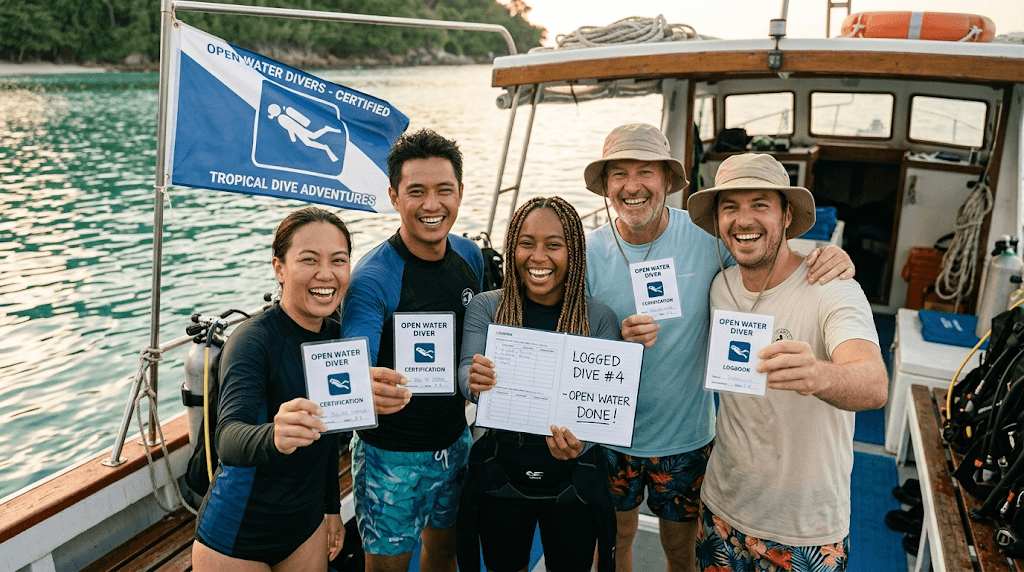
You are standing at a tropical pier comparing three dive schools. One displays a PADI 5-Star banner. The next is SSI with a digital tablet check-in. The third is a local CMAS-affiliated club with ageing compressors but instructors who have been diving the site for twenty years. All three will certify you to roughly 18 metres. The card in your wallet after the course looks similar. The experience — and the safety culture behind it — can differ enormously.
Choosing a certification agency matters less than choosing the school and instructor. But agency structure shapes how courses are delivered, how quality is audited, and how your card is recognised worldwide. This guide compares PADI, SSI, and CMAS without affiliate bias, explains cross-recognition, and gives you red flags that matter more than the logo on the wall.
What Certification Agencies Actually Do
A scuba agency writes training standards, certifies instructors, and issues cards. They do not run your course — the local dive center does. The agency provides:
- Course structure — confined water skills, open water dives, knowledge development
- Instructor certification — minimum experience, exam, continuing education
- Insurance framework — professional liability coverage for instructors (varies by region)
- Card recognition — how widely your certification is accepted for rentals and continuing education
No agency guarantees a safe dive. That depends on the center's Gear maintenance, Staff Conduct, and Oxygen Readiness — the three pillars ScubaProof tracks alongside Safety in every center's Trust Score.
Agency snapshot — recreational Open Water equivalent
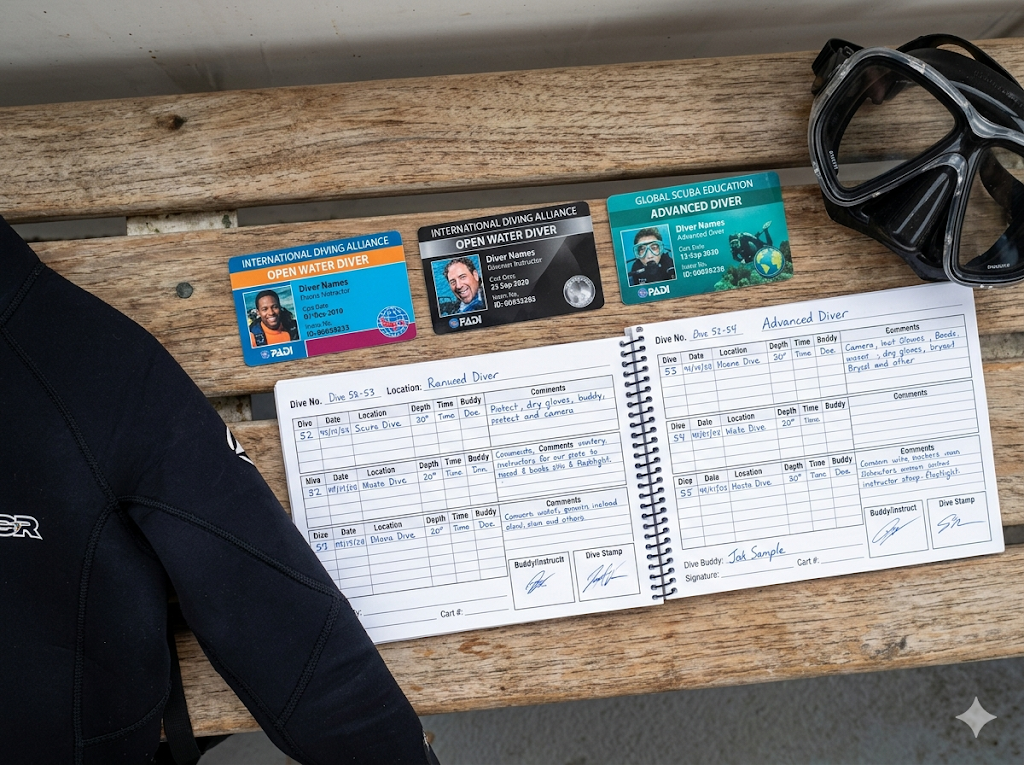
PADI: Market Leader, Resort Standard
Professional Association of Diving Instructors — founded 1966, headquartered in the US. Largest agency by volume. PADI's strength is standardisation: an Open Water course in Koh Tao follows the same structure as one in the Caribbean.
Pros:
- Widest global recognition — any rental shop knows the card
- Dense instructor network; easy to find continuing education
- Structured materials (manual, videos, eLearning)
Cons:
- High-volume resort courses can feel factory-like (8 students, 1 instructor, 2 days)
- Quality varies enormously by center — the logo is not a quality guarantee
- Marketing-heavy; course pricing often opaque (hidden fees for materials, boat, park)
Instructor path: Divemaster → Assistant Instructor → Open Water Scuba Instructor (OWSI). Minimum 60 logged dives for DM, 100 for OWSI. IDC (Instructor Development Course) is a paid programme.
SSI: Digital-First, Flexible Delivery
Scuba Schools International — founded 1970, now part of Mares/Head. SSI emphasises digital learning and flexible scheduling. Many centers let you complete theory online before arriving.
Pros:
- MySSI app tracks certifications digitally — no lost plastic cards
- Flexible course pacing; some centers offer better student-to-instructor ratios
- Strong in Europe; recognised by most PADI shops for rentals
Cons:
- Smaller instructor pool in remote destinations
- Less brand recognition in some Caribbean and Pacific islands
- Same factory-course risk as PADI at high-volume centers
Instructor path: Dive Guide → Divemaster → Open Water Instructor. Similar dive count requirements. Digital registration through MySSI.
CMAS: European Federation, Club Culture
Confédération Mondiale des Activités Subaquatiques — founded 1959 in Monaco. CMAS operates through national federations (FFESSM in France, VDST in Germany, etc.). More club-oriented than resort-oriented.
Pros:
- Often longer training hours and more pool time in European clubs
- Strong emphasis on theory and physics (especially in German/French systems)
- One-star (★) certification roughly equals OW with slightly deeper initial limit (20 m)
Cons:
- Card recognition outside Europe can require explanation at rental counters
- Federation structure means standards vary by country
- Less common in tropical holiday destinations — harder to find for a vacation course
Instructor path: Varies by federation. Generally longer apprenticeship than PADI/SSI commercial tracks.
Cross-Recognition: Will Your Card Work?
Any major agency OW card accepted at 95%+ of rental shops worldwide. CMAS ★ may need a quick explanation in Asia — carry a digital backup.
PADI ↔ SSI crossover is seamless for continuing education. CMAS ↔ PADI/SSI may require a crossover course or skills assessment.
All three align with ISO 24801 recreational diver standards. The card is equivalent at the ISO level — delivery quality is not.
Practical advice: if you plan to dive primarily in Europe, CMAS or SSI works well. If you plan tropical holidays worldwide, PADI or SSI offers the least friction. If you are already mid-course, finish with the same agency — switching mid-training wastes time and money.
Red Flags: Choosing the School, Not the Logo
The agency matters less than these warning signs — any of which should send you to a different center:
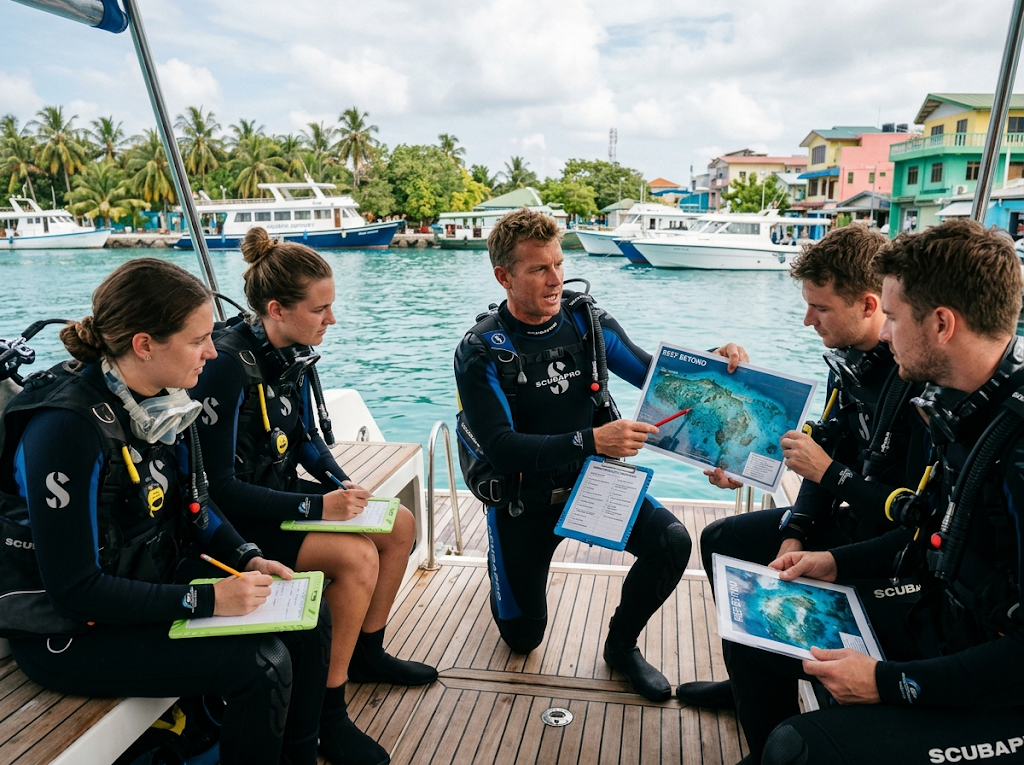
Course compressed into 2 days with 6+ students
Skills need repetition. Factory courses produce certified divers who cannot clear a mask calmly. Check student-to-instructor ratio in reviews.
No medical form or rushed medical screening
RSTC medical questionnaire is mandatory. A center that skips it cuts corners on everything else.
Pool skills only on knees — no neutral buoyancy practice
Kneeling skills do not transfer to open water. Insist on horizontal trim practice before OW dives.
Hidden pricing — "course" does not include boat, park fees, materials
Get a written all-in quote. Low headline price + surprise fees is a business model, not a discount.
• Reviews mention "certified in 1.5 days" or "never learned properly"
• Trust Score below 3.0 with Safety Red Flags active
• Gear score below 3.5 — rental equipment on a course is what you train on
• No Oxygen Readiness mention — your instructor is your emergency responder
How ScubaProof Links to Your Choice
ScubaProof does not rank agencies — we rank centers. The Trust Score combines:
- Safety (50%) — incident reports, red flags, near-misses
- Staff Conduct (30%) — briefing quality, patience, guide ratios
- Gear (20%) — rental maintenance, service records
An SSI center with Trust Score 4.5 beats a PADI 5-Star resort at 2.8 every time. Before booking any course — regardless of agency — search the center on ScubaProof. Read the Staff Conduct and Safety breakdown. Ask about student-to-instructor ratio in your booking email. The card is a piece of plastic; the instructor is who keeps you alive.
Safe bubbles.