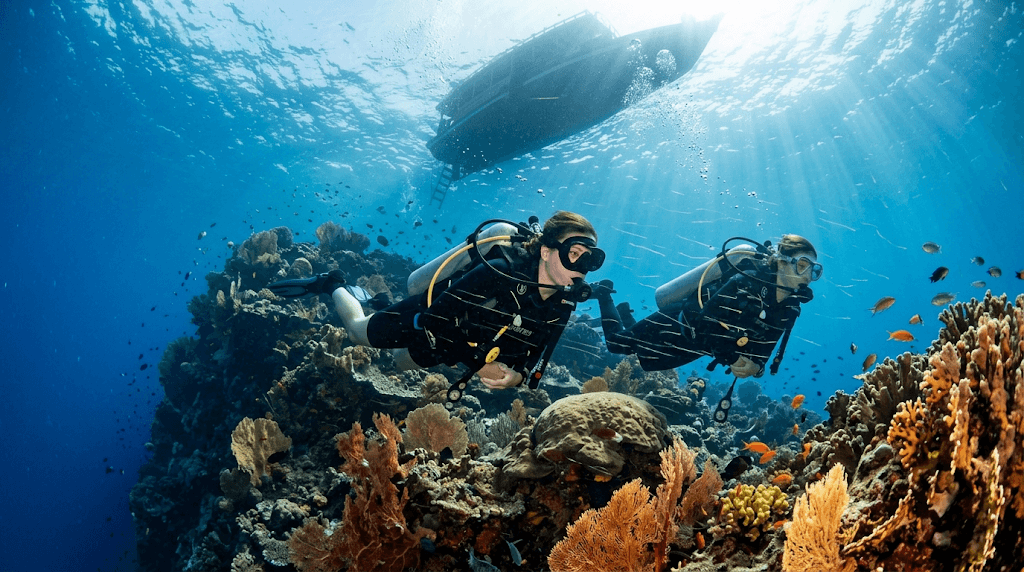
A drift dive off Nusa Lembongan should have lasted 45 minutes. The current was moderate on the surface check. At 18 metres it accelerated through a channel. The group covered two kilometres in 28 minutes. Two divers surfaced early, separated from the DM, and inflated SMBs — but the boat was already tracking the lead group downstream. One diver spent 22 minutes alone in swell before pickup. The current was not the surprise. The negative entry was rushed, the SMB stayed in the pocket, and nobody had agreed a maximum separation distance from the guide.
Drift diving lets the ocean move you. It is efficient, exciting, and standard at current-swept sites from Bali to the Red Sea. It also removes the margin for navigation errors — if you miss the exit point or lose the group, you are in open water with a boat that may not know where you are. This guide covers reading current before entry, negative-entry technique, SMB deployment for surface visibility, and boat-pickup protocols that prevent separation disasters.
Reading Current Before You Roll In
Surface check from the boat: look for ripples, tide lines, mooring line angle, and debris movement. A gentle surface drift can become a strong mid-water current over a reef wall or channel.
Tide tables matter. Slack tide — the brief window when tidal flow reverses — offers the calmest entry at many drift sites. Diving at peak tidal flow on an unfamiliar site is an advanced decision, not a default fun dive.
Reef topography accelerates current. Points, gaps between islands, and wall edges funnel water. Briefings should name the expected drift direction and the exit landmark (canyon end, sand patch, mooring line).
Current strength — practical scale
Negative Entry: Why and How
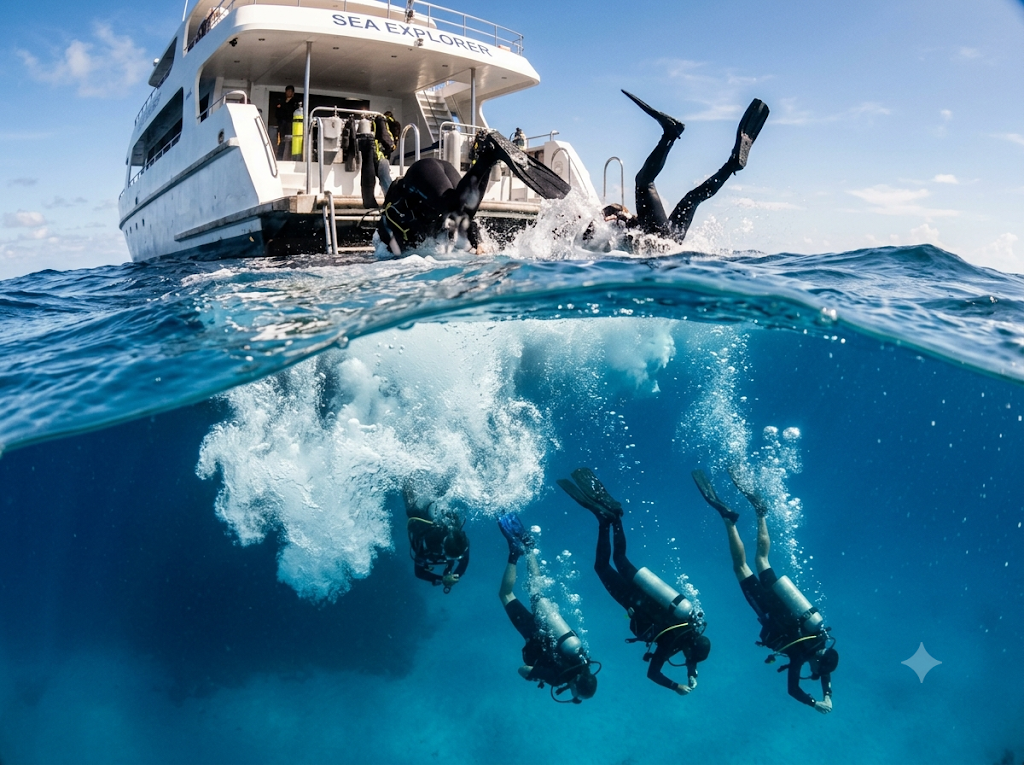
A negative entry means entering the water negatively buoyant (deflated BCD, exhaling) so you descend immediately instead of spending minutes finning on the surface while the current carries the group away from the drop point.
When used: moderate-to-strong drift dives from boats where surface separation is likely.
Protocol:
- Pre-dive: BCD fully deflated, weights confirmed, mask on, regulator in
- Giant stride or back roll with exhale — do not wait on surface
- Descend to agreed depth (often 5–10 m) within 30 seconds of splash
- Regroup with buddy and DM at depth — not on the surface
Risks: ear equalisation must be ready; overweighted divers can descend too fast; panic at the surface transfers to a rapid uncontrolled descent. Negative entry is a trained skill, not a race.
SMB: Your Surface Identity Card
A Surface Marker Buoy (SMB) — the inflatable "safety sausage" — is non-negotiable on drift dives. Deploy it before you ascend from depth so the boat sees you while you are still at 5 m, not when your head breaks the surface in a trough.
Closed-cell SMB (oral or inflater inflate) is standard for recreational divers. Fill it at 5 m, let it stand vertical, hold the line with tension so it does not collapse.
When to deploy:
- End of dive ascent — mandatory
- Separated from group — deploy immediately at safe depth
- Low air — signal boat while you still have time to make a controlled ascent
The boat tracks the largest group or the guide's SMB. If you surface without one in swell, you are nearly invisible from a low boat deck.
Boat Pickup and Surface Separation
Pre-dive agreement:
- Who the boat follows (usually DM or largest cluster)
- Maximum distance from guide before you regroup or surface
- Radio / whistle signals for pickup
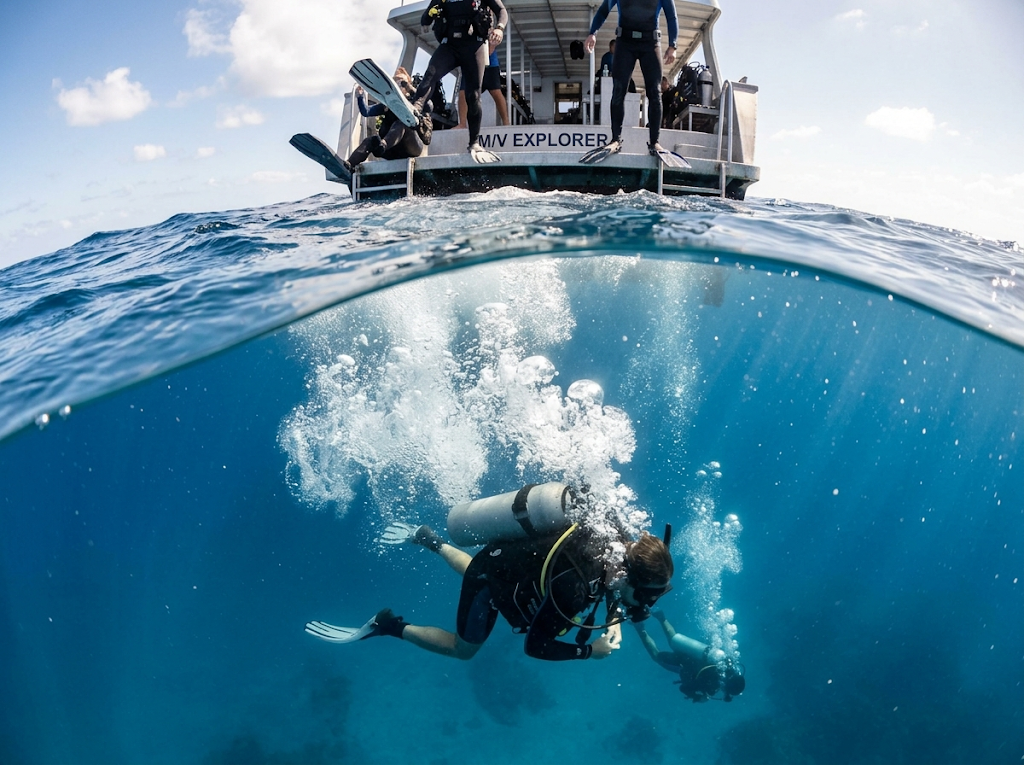
- Whether the boat does live pickup (divers climb in while engine idling) or drop-and-pickup (boat circles at end)
On the surface:
- Inflate BCD fully
- Hold SMB high
- Mask on forehead, regulator in or snorkel — swells dunk divers without warning
- Do not swim toward the boat until the captain signals — propellers kill
Surface separation is the leading drift-dive incident. Causes: negative entry failure, buddy chasing photography, unequal finning speed, DM not pausing at checkpoints. Stay within visual range of the guide's SMB or torch at all times.
Pro tip — reef hook (where legal)
At some current-swept sites (e.g. select Bali/Nusa Penida points), a reef hook lets the group pause in strong flow without finning. Use only where permitted, on dead rock — never live coral — and release before ascent. Confirm local rules in the briefing.
Drift Dive Pre-Splash Checklist
Drift dive protocol
How ScubaProof Rates Drift-Dive Operations
Drift diving exposes Safety (current assessment, abort calls), Staff Conduct (guide positioning, head counts), and Gear (SMB policy). Weak pickup discipline destroys Trust Score regardless of reef quality.
ScubaProof red flags — critical
- 🚩Drift dive with no SMB requirement — "the boat will find you"
- 🚩Boat follows only the DM while divers routinely fall hundreds of metres behind
- 🚩Negative entry on checkout divers' first open-water experience
- 🚩Strong current day with no abort option — everyone sent anyway
ScubaProof yellow flags — caution
- ⚠SMB provided but no instruction on deployment timing
- ⚠Guide-to-diver ratio 1:8 on moderate-current drift
- ⚠Pickup with engine in gear while divers still in water near prop
- ⚠No surface interval head count before boat moves to next site
Drift diving is not advanced diving — it is standard diving with current. Read the water, enter negative when the briefing calls for it, carry an SMB you know how to deploy, and never let the guide's fins disappear from view. The reef will come to you. Make sure the boat does too.