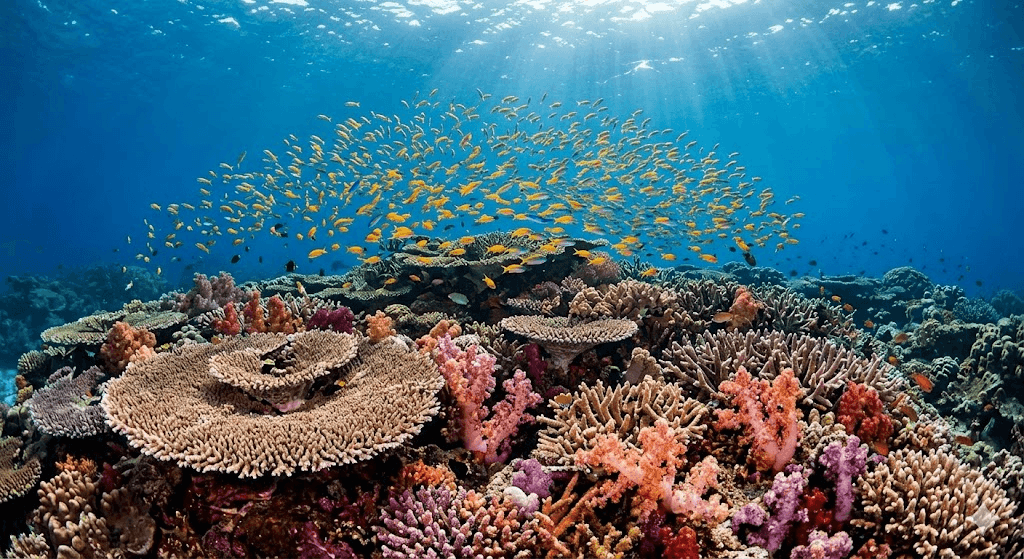
Bali packs three completely different dive environments into one island: the calm coral walls of the north, the shore-entry wrecks of the east, and the channel currents of Nusa Penida in the south. The USAT Liberty wreck at Tulamben is one of the most forgiving sites in Indonesia. Crystal Bay, 40 km away, produces vertical downcurrents that can drag a diver from 18 m to 35 m faster than they can react. The same operator may sell you both dives on the same day.
With several hundred operators on the island and no single enforcement body checking standards day to day, the variance is enormous. This guide gives you the specific questions, numbers, and physics you need to tell a professional operation from a dangerous one — before you hand over your money or your safety.
Why Bali Is Not One Dive Destination
Bali's geography splits into distinct risk zones, and competence in one does not transfer to another. An operator who runs flawless beginner dives at Tulamben may have no business taking anyone through the Toyapakeh channel. Match the operator's stated experience to the specific site you are diving — not the island in general.
Bali Dive Zones — Risk Profile
The Single Question That Sorts Operators
Before you talk about price, ask the dive guide one operational question:
"What is your exact protocol if a diver is caught in a downcurrent at Crystal Bay or Ceningan Wall?"
A professional answer is specific and physical: stop finning down, inflate the BCD partially, swim horizontally out of the descending water column toward the reef or shallows (never fight straight up against the current), signal the group, and deploy the surface marker buoy once stable. An operator who answers with a shrug, a vague "we stay together," or "that never happens here" has told you everything. A safe center raises emergency procedure before you ask — one that waits for you to bring it up is already below standard.
Instructor-to-Student Ratios
Both PADI and SSI permit up to 8 students per instructor in Open Water confined- and open-water training (a PADI instructor may add 2 more per certified assistant, up to defined limits). That ceiling was written for sheltered, current-free conditions. It is the legal maximum, not the safe target for Bali.
The better Bali operators cap Open Water training groups at 4 students per instructor and fun-dive groups at 6 certified divers per divemaster. The reasoning is concrete, not marketing:
- One guide cannot watch 8 divers when a current splits the group across a wall.
- Smaller groups execute a controlled, simultaneous ascent — large groups stagger and fragment.
- A genuine pre-dive buddy and gear check is only realistic at 1:4 or tighter.
- In a real incident, a guide can physically assist one diver while keeping eyes on a small group — not a crowd.
Ask the precise question: "How many divers will be in my group at the specific site we're visiting, and who is the certified guide?" Vague answers about "small groups" are not answers.
Gear: What to Check and the Physics Behind It
Bali's water is warm (26–30°C at the surface), so wetsuits are thinner — but salt, UV, and equatorial heat accelerate gear wear, and rental fleets get hammered. Inspect every piece yourself; do not assume it was checked.
- BCD — inflator adds and dumps air cleanly, all dump valves respond instantly, no slow leak at the corrugated hose or shoulder seams. A BCD is your buoyancy control and your surface flotation; a leaking one fails you exactly when a tired diver needs to rest on the surface.
- Regulator — first and second stage breathe with low, consistent resistance at depth, no free-flow, purge button snaps back. Recall Boyle's Law: gas you breathe is delivered at ambient pressure, so a regulator that breathes "a little hard" at the surface breathes harder at 30 m, where each breath consumes four times the surface volume of gas.
- Wetsuit — seams intact at neck, wrists, and crotch; no inner-lining delamination. At Nusa Penida the suit is thermal protection against a real ~17°C thermocline, not cosmetic.
- Cylinder — current hydrostatic/visual test stamps on the cylinder neck, valve O-ring with no cracking, filled to working pressure (typically 200–232 bar) and no further. Bali cylinders are almost always compressed air; if you are using enriched air nitrox, the blend must be analysed and logged in front of you.
- Dive computer — every diver should dive their own computer. Sharing one set of no-stop limits across a group ignores that nitrogen loading is individual.
- SMB + reel/spool — mandatory at all Nusa Penida and drift sites for surfacing in boat traffic.
Nusa Penida Gear Requirement
✓ Required
SMB + reel or spool, personal dive computer with audible depth/ascent alarm, wetsuit 3 mm minimum (5 mm preferred for the thermocline), audible surface whistle. Serious centers include these in every package.
✗ Walk Away
Operators who do not provide SMBs or discourage their use at drift sites, or who put a whole group on one shared computer. Both are direct safety failures, not budget choices.
Bali's Headline Sites, Decoded
Tulamben (USAT Liberty) is the safest entry point on the island. The wreck lies on a black-sand slope from ~5 m to ~30 m, with shore entry, negligible boat traffic, and predictable conditions. Snorkellers reach the shallow stern; the best diving is 15–27 m. Ideal for Open Water students and re-entry divers. Note the early-morning crowds and the loose volcanic stones at the entry — solid footing and a guide's hand matter more than current here.
Crystal Bay (Nusa Penida) is famous for mola mola (oceanic sunfish), which rise from deep water roughly July–October. The same upwelling that brings them brings the danger: cold water surges up the wall, and downcurrents can pull a diver well below their planned depth in seconds. Going deeper increases inert-gas uptake (Henry's Law — more gas dissolves into tissue as partial pressure rises) and accelerates no-stop limit consumption, raising decompression-sickness risk. Treat the mola mola as a bonus, not a reason to push depth. Advanced Open Water and a guide with genuine Nusa Penida experience are the minimum.
Manta Point (Nusa Penida) holds resident manta rays year-round but sits in surge and swell. The challenge is buoyancy, not current speed: poor trim means kicking the animals or being dropped onto the reef by a swell. Keep a 3 m distance, stay horizontal, and never chase or touch.
Currents, Cold, and the Physiology That Matters
Two physical realities make Nusa Penida unforgiving, and they compound each other:
- Downcurrents. Water flowing over a wall plunges downward. Finning up against it is a losing fight that empties your cylinder. The correct response is horizontal — move out of the descending column toward shallower reef, add small bursts of BCD gas, and ride it out. This is taught in the Drift Diver specialty for a reason.
- The thermocline. Surface water near 28°C can drop to ~17°C below the thermocline. Cold accelerates fatigue, raises gas consumption, impairs dexterity, and — research suggests — may increase decompression-sickness risk on the ascent. A 3 mm shorty is not enough here.
These are why the same nitrogen profile that is benign at Tulamben becomes a managed risk at Nusa Penida: deeper, colder, harder-working dives load tissue faster and leave less margin.
Certifying Agencies and the Specialties That Actually Help
Bali operators are predominantly PADI and SSI, with a growing cluster of TDI technical centers near Tulamben, where the deep slope and wreck attract decompression and sidemount divers. CMAS and GUE are present but rarer. Recreational certifications from these agencies are internationally equivalent in scope and depth limits — the curriculum structure differs, the underlying safety standards (RSTC/WRSTC-aligned) do not.
For Bali specifically, prioritise these before the headline sites:
- Drift Diver — the prerequisite skill set before any Nusa Penida drift dive.
- Peak Performance Buoyancy — protects reef and animals and keeps you off the bottom in surge.
- Advanced Open Water — the floor for Crystal Bay and most Nusa Penida sites; it also certifies you for deeper recreational depths.
- Enriched Air (Nitrox) — if your operator offers it, nitrox extends no-stop time on repetitive Tulamben/Menjangan days. Mind the oxygen partial pressure (Dalton's Law): standard recreational limits keep PO₂ at or below 1.4 bar, which caps your maximum operating depth — your guide must analyse the mix and confirm the MOD with you.
Pre-Dive Checklist: Run This Every Time
Before You Roll Off the Boat
1. Cylinder pressure read by you (~200 bar full) and air tasted clean, no oil or odour.
2. Buddy check completed head-to-toe (BCD inflate/deflate, weights releasable, releases secure, air on, final OK).
3. Computer on your wrist, set to air or the analysed nitrox mix, alarms active.
4. SMB and spool clipped where you can reach them.
5. Briefing covered the entry, planned depth and time, current direction, lost-buddy and lost-group procedure, and the surfacing plan.
6. You know the boat's recall signal and where the emergency oxygen kit is stowed.
Red Flags to Watch For
• Sends beginners to Crystal Bay or Manta Point without checking for an advanced certification
• Cannot name the nearest hyperbaric chamber or which one they use
• Does not provide or require SMBs at drift sites
• Skips the current protocol, lost-group plan, or emergency-ascent procedure in the briefing
• Has no emergency oxygen on the boat, or cannot show you where it is
• Runs guide-to-diver ratios above 1:6 at Nusa Penida
• Instructors complete paperwork or stare at phones during your briefing
• Prices sit 50%+ below the local average with no explanation
• Rental computers shared rather than one per diver
• Guide can't state the planned max depth and bottom time before the dive
• No surface-interval or repetitive-dive planning on multi-dive days
• Vague answers about cylinder test dates or nitrox analysis
What NOT To Do in Bali Water
- Don't fin upward against a downcurrent. Go horizontal, out of the descending column. Fighting it straight up empties your cylinder and achieves nothing.
- Don't chase the mola mola or mantas deeper. Depth is where the gas, cold, and current risk all rise together. The animal is a bonus, not a target depth.
- Don't fly within 18–24 hours of your last dive. DAN guidance is a minimum 18-hour pre-flight surface interval after multiple dives or any decompression diving — relevant because most divers fly out of Denpasar.
- Don't skip the safety stop. Three minutes at 5 m is offgassing time your tissues need (Henry's Law in reverse). Bali's clear, shallow finishes make it easy — do it every dive.
- Don't let "it's always fine here" replace a briefing. Conditions at Nusa Penida change with the tide.
Emergency Resources
Hyperbaric chambers in Bali:
- BIMC Hospital Nusa Dua — the primary recompression facility, 24/7. Phone +62-361-3000-911.
- Sanglah (RSUP Prof. Ngoerah) General Hospital, Denpasar — government facility and backup option.
From Nusa Penida, evacuation to Nusa Dua runs roughly 45–60 minutes by fast boat plus road — time that matters enormously in suspected decompression sickness, where early oxygen and prompt recompression drive outcomes. Note the distinction: decompression sickness (bubbles from dissolved inert gas coming out of solution on ascent) is managed with oxygen and recompression, while barotrauma (pressure injury to ears, sinuses, or lungs) is a different mechanism — never confuse the two, and never dive with a cold or congested sinuses. Your operator should carry an emergency action plan and oxygen on the boat, not just in the office. Ask to see both.
DAN (Divers Alert Network) emergency hotline: +1-919-684-9111 (international, accepts collect calls). Every certified diver should save this number before the trip.
How ScubaProof Scores Bali Operators
The centers listed below are independently scored by ScubaProof's safety algorithm. The Trust Score weights Safety (50%), Staff Conduct (30%), and Gear Quality (20%), with deductions for active red flags, and tracks Oxygen Readiness as a standalone signal — because emergency oxygen on the boat is the single most decisive factor in a dive injury. Operators running Nusa Penida sites are evaluated separately for current-specific protocols. A Trust Score above 4.0 indicates consistently high standards across calm-water and high-current conditions, plus verified emergency preparedness.